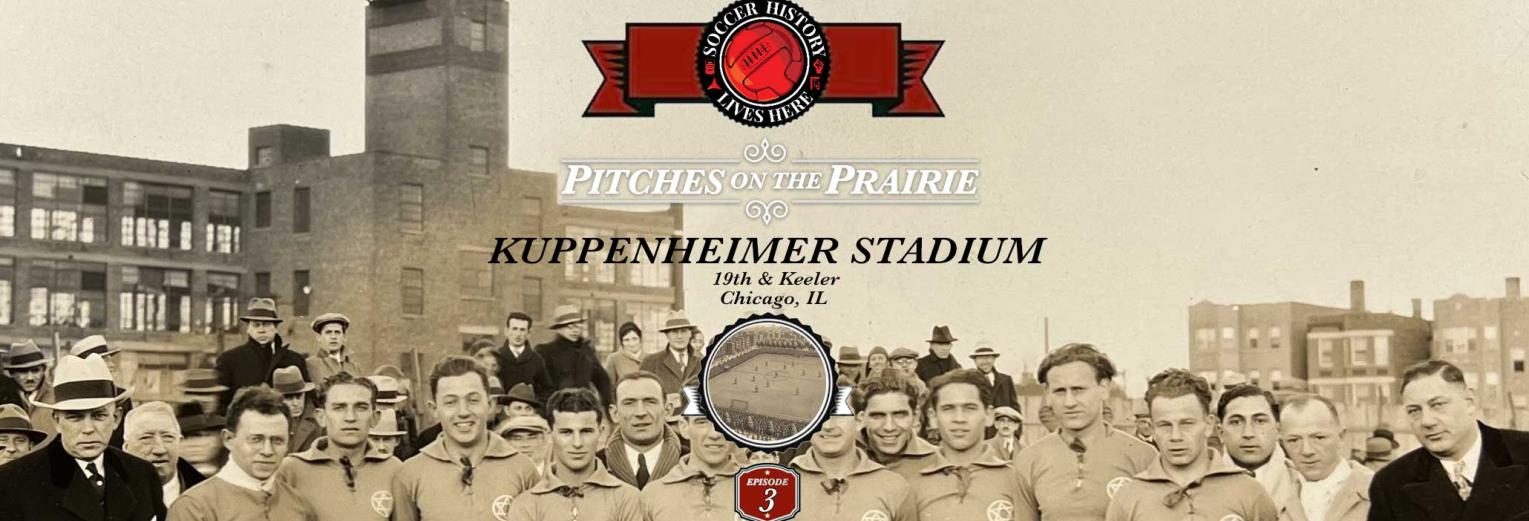
Pitches on the Prairie Ep 3 - Kuppenheimer Stadium
Soccer Specific Stadiums: Kuppenheimer Stadium
- Length
2:38
- Category
Stadiums
- Decade
1900s
- Tags pitches on the prairie Kuppenheimer Sparta Chicago Bricklayers Hakoah Logo-Raised Fist
Description
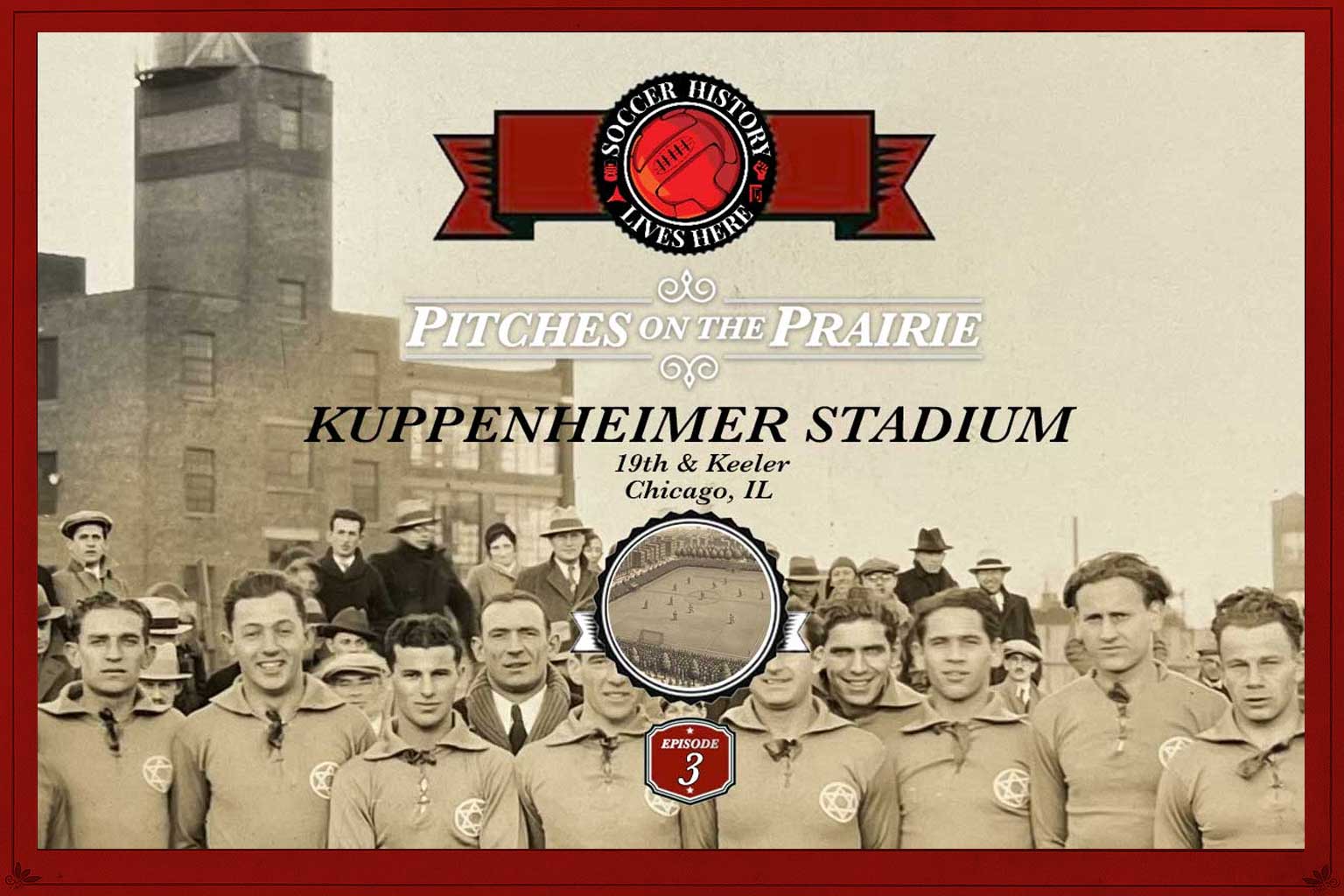
Kuppenheimer Stadium
The third installment of Soccer History Lives Here’s #pitchesontheprairie project is now available!
LOCATION: Chicago’s North Lawndale Community, between 18th Street and 19th Street (North/South) on Keeler Ave, just north of K-Town Historic District
Shirt: “Trans People Belong” in Soccer/Sports
Kuppenheimer Stadium was one of three primarily soccer focused grounds (not quite earning the moniker, Soccer Specific Stadium) on the West Side of Chicago, near the border with Cicero, in the first half of the 20th century.
Located on the property of the Kuppenheimer & Company clothing factory, this ground hosted many important matches in the 1930’s, including a game in the 1934 US Open Cup semi-finals (referred to as “the US Challenge Cup Western Finals” at the time).
During its heyday, Peel Cup winning side Maccabees A.C. and Hakoah Center hosted teams from throughout the midwest there. Jewish sporting events such as the 1932 Jewish Youth Field Day demonstrate that 19th and Keeler was an important site for Chicagoland's Jewish sporting community.
Soccer History Lives Here Logo element, Raised Fist: Community Solidarity
Historic Details 1
Part 1 - Historic Details
Kuppenheimer Stadium
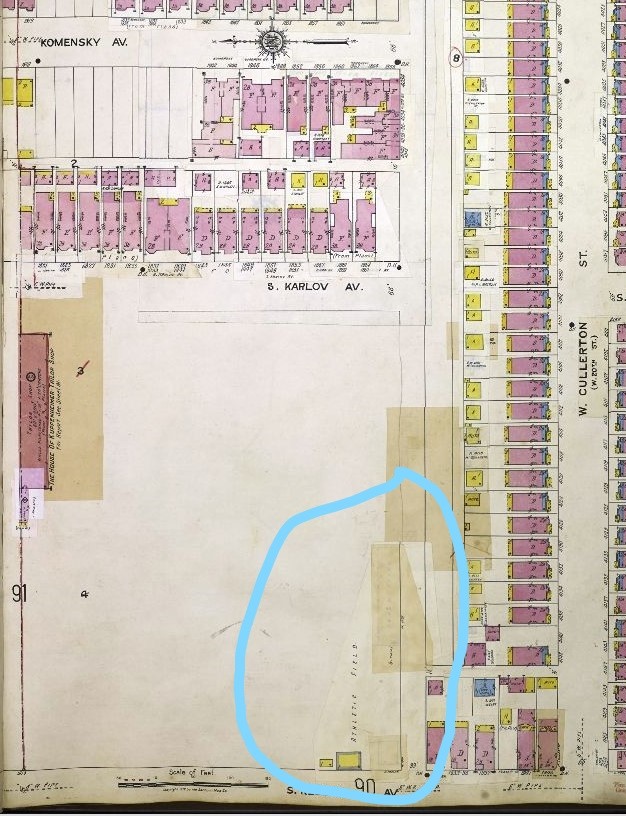
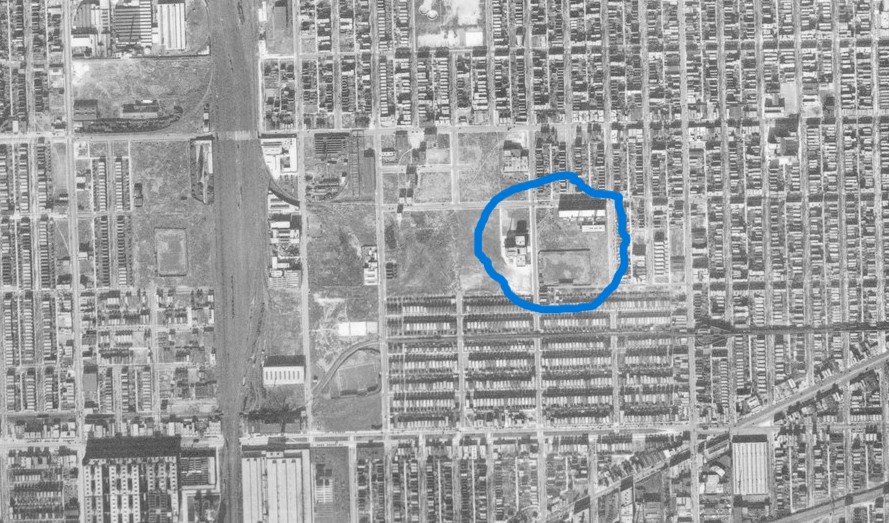
LOCATION: Chicago’s North Lawndale Community, between 18th Street and 19th Street (North/South) on Keeler Ave, just north of K-Town Historic District (1-3, Sanborn Map, Aerials)
Shirt: “Trans People Belong” in Soccer/Sports
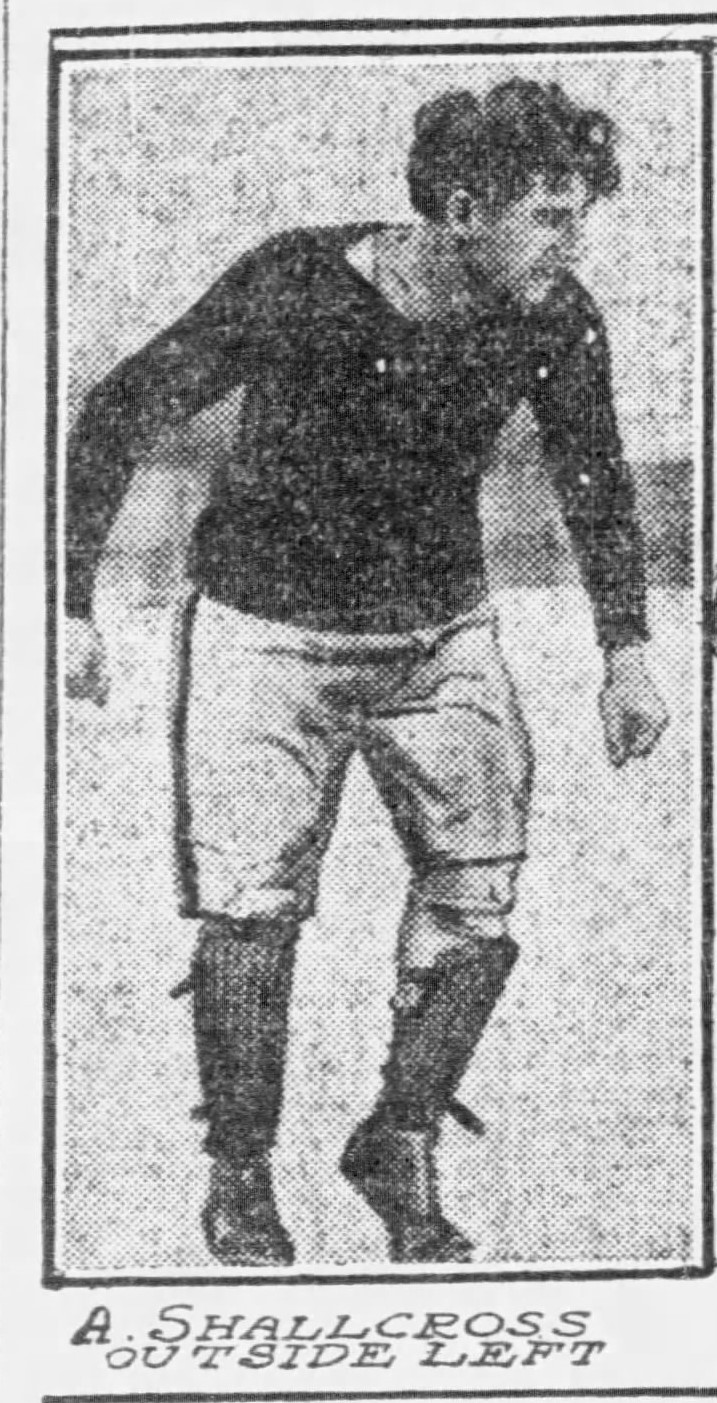
Soccer had been played in the Kuppenheimer Stadium area from at least 1904 when the White Star Rangers played matches at 18th and Keeler in the Chicago Football Association league. Included on the Rangers roster in that 1904 season was Albert Shallcross, an immigrant from England and a mainstay of the Chicago soccer scene for more than 4 decades. We’ll be talking a lot more about Albert Shallcross when we cover Pullman’s extensive soccer history (4).
The primarily British immigrant White Star team did not last long, and soccer seemed to take a hiatus at the field until 1914 when Slavia played games at 18th and Keeler. Slavia, previously known as the Bohemian Sporting Club were a Czech aggregation and the fact that they called the area their local ground, highlights the makeup of the immigrant community on the west side of North Lawndale in the early 1900’s.
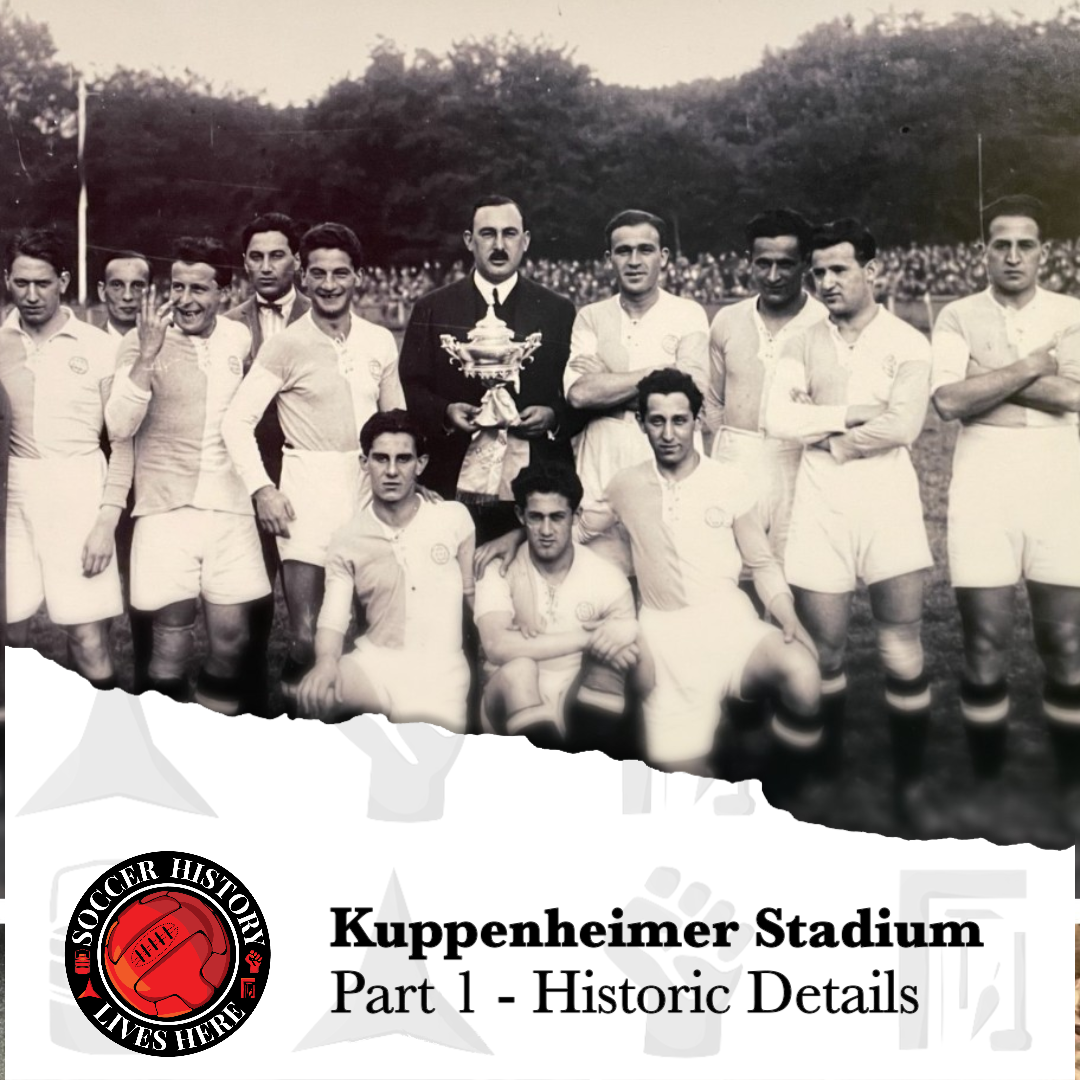
In 1920, B. Kuppenheimer & Co. purchased the land where they would build their clothing factory and sports stadium, but it would take more than a decade to complete the project. As construction on the factory at 4101 W. 18th St was taking place, sport was happening in the area as well. The Roosevelt Athletic Club started playing there in 1925 and their rebranded Hakoah (which means “strength” in Hebrew) team in 1927, highlighting the importance of Jewish sport in the space.
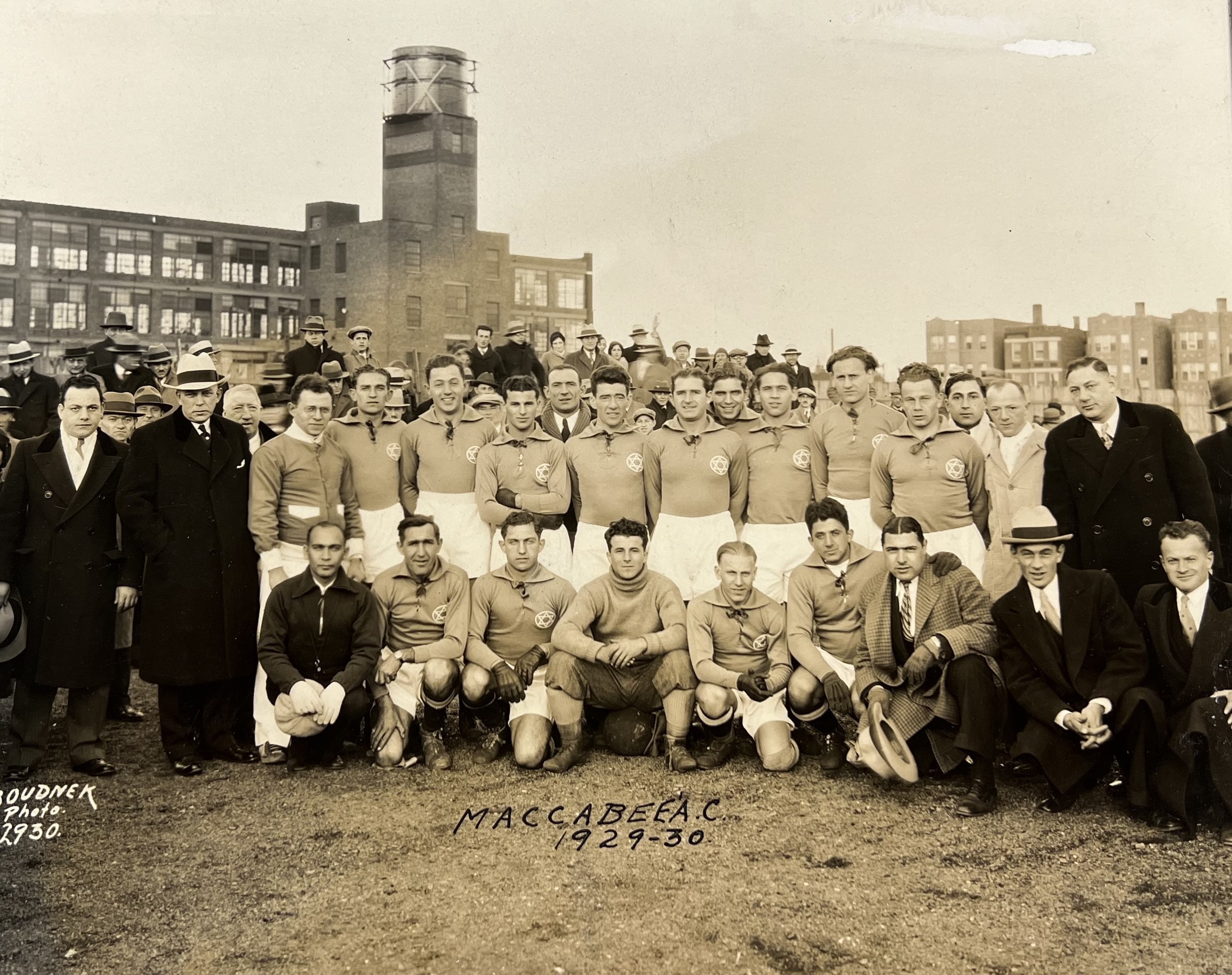
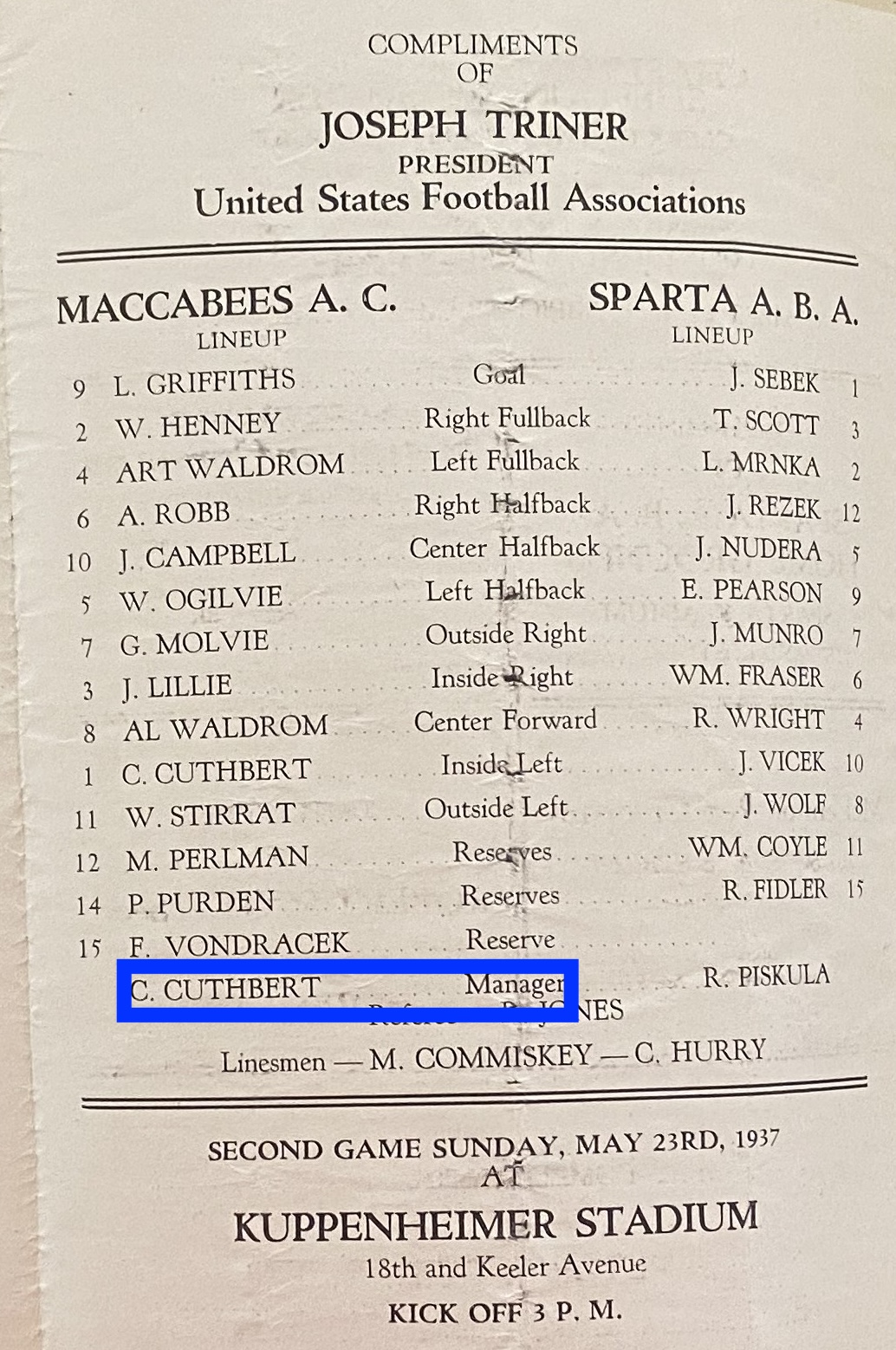
As professional soccer in Chicago was finding its footing, numerous clubs began paying their players, including the Maccabees Athletic Club team (5). While initially a Jewish club, Maccabees did not limit their players to the Jewish community. The 1936 Peel Cup winners recruited heavily from the Scottish diaspora to help win games and had long-time Chicago Bricklayers player, Clem Cuthbert (6) on the field and on the sidelines as head coach.
CREDITS:
1-Vienna Hakoah Collection
2-1950 Sanborn Map, Sanborn Fire Insurance Map from Chicago, Cook County, Illinois. Sanborn Map Company
3-1938 Aerial Photo of North Lawndale
4-Shallcross, Chicago Tribune 20 Dec 1908 p. 16
5-Maccabees Team Photo 29-30, Hap Meyer Collection Southern Illinois Edwardsville
6-Game Program Maccabees, Carbon Hill Museum, Dick Vidano Collection
Historic Details 2
Part 2 - Historic Details: Kuppenheimer Stadium
In the early 20th century Chicago’s Lawndale was growing rapidly on the Illinois Prairie. The makeup of soccer teams in the area reflect that growth, initially British teams were looking for flat ground in 1904, then Czech teams in the early 10’s followed by Jewish teams in the 20’s.
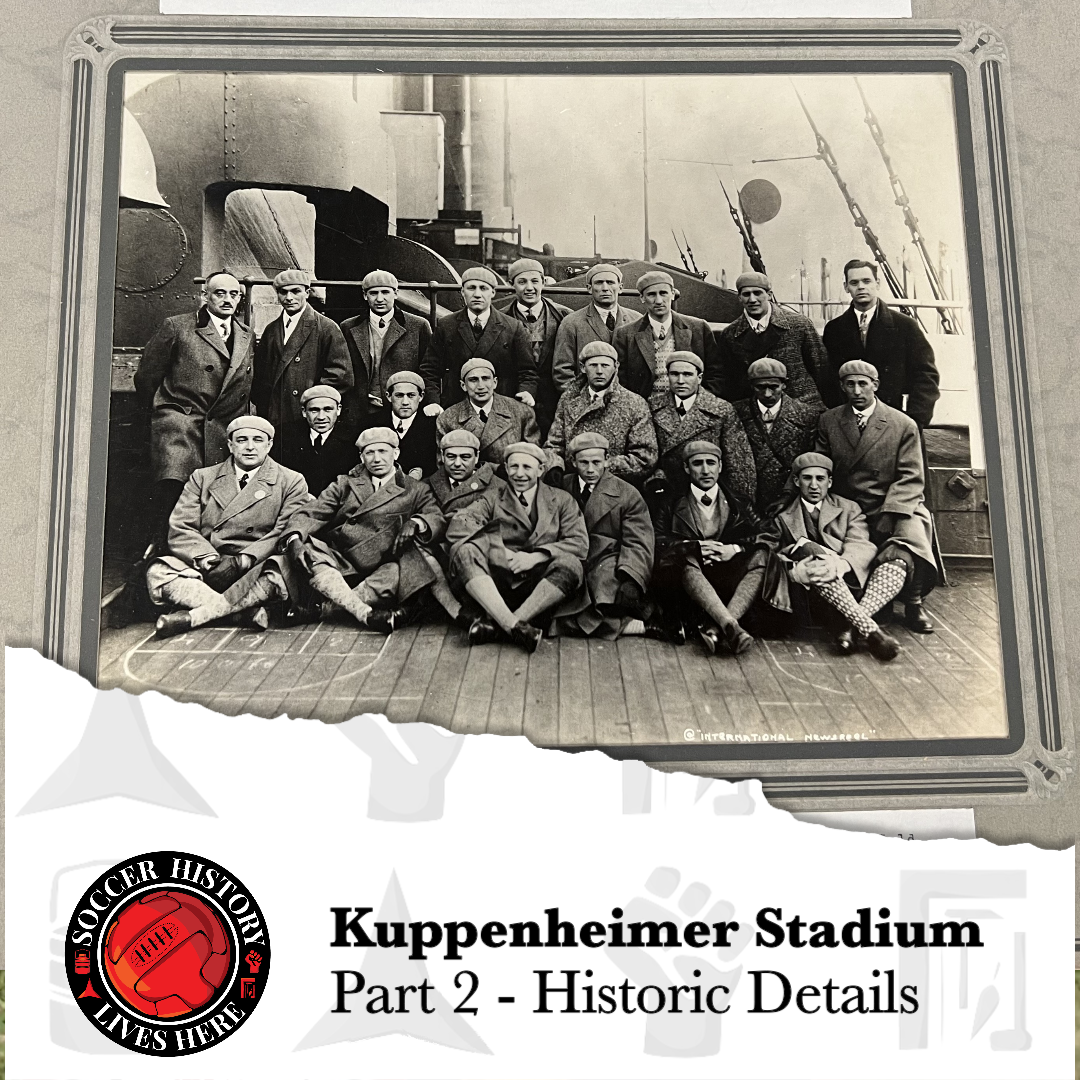
By 1930, North Lawndale, as the community where Kuppenheimer is located was re-classified in 1922, was considered “an epicenter of Jewish culture in Chicago.” Primarily Jewish clubs like Roosevelt AC (who became Hakoah after the 1926 Vienna Hakoah tour-2) played at 19th and Keeler. Maccabees, who called Kuppenheimer home for most of their existence(3), committed to fielding a professional side.
The stadium was gone by 1940, though the open space was used for softball and ice hockey. Kuppenheimer & Co. sold off the land where the stadium sat, and an innovative housing project was initiated in 1959. The Lawndale Redevelopment Corporation purchased the property and endeavored to build "non-discriminatory housing.”(4)
Completed in 1969, Kedvale Square was a public/private partnership in which the housing was built by a private builder and the federal government would help “middle income” families pay for their units (5). The project won a distinguished design award from the American Institute of Architects, but actual construction was poor, and residents had to spend excessively to maintain the property. By 1972, Kedvale Square was the subject of a New York Times story about “urban blight.”(6)
The Kedvale Square project was not the first time housing had been a national story in the community. Martin Luther King Jr. moved into North Lawndale in 1966 in order to highlight housing discrimination in Chicago. His apartment at 1550 N Hamlin(7) is now a historic site and is about 4 miles from Kuppenheimer, though less than a block from 16th and Ayers, a field we’ll highlight in a future #pitchesontheprairie episode.
Though the ground of Kuppenheimer Stadium is now empty, there has been a concerted effort to celebrate the history and vibrancy of the area with @BlockClubChicago and @MahogonyTours offering community walking tours.
“Epicenter of Jewish community” from
(https://www.wttw.com/chicago-by-l/neighborhoods/north-lawndale)
1-North Lawndale Narration Video
2-Vienna Hakoah Team photo, Hap Meyer Collection Southern Illinois Edwardsville
3-Game Program Maccabees, Carbon Hill Museum, Dick Vidano Collection
4-21 July 1962 Chicago Defender
5-Clipping with Daley 2 Dec 1967 Chicago Tribune
6-NYT article 13 Jan 1972
7-King Photo Chicago Architecture Center
8-Mahagony Tours
Historic Details 3
Part 3 - Historic Details: Kuppenheimer Soccer Matches, Players and Teams
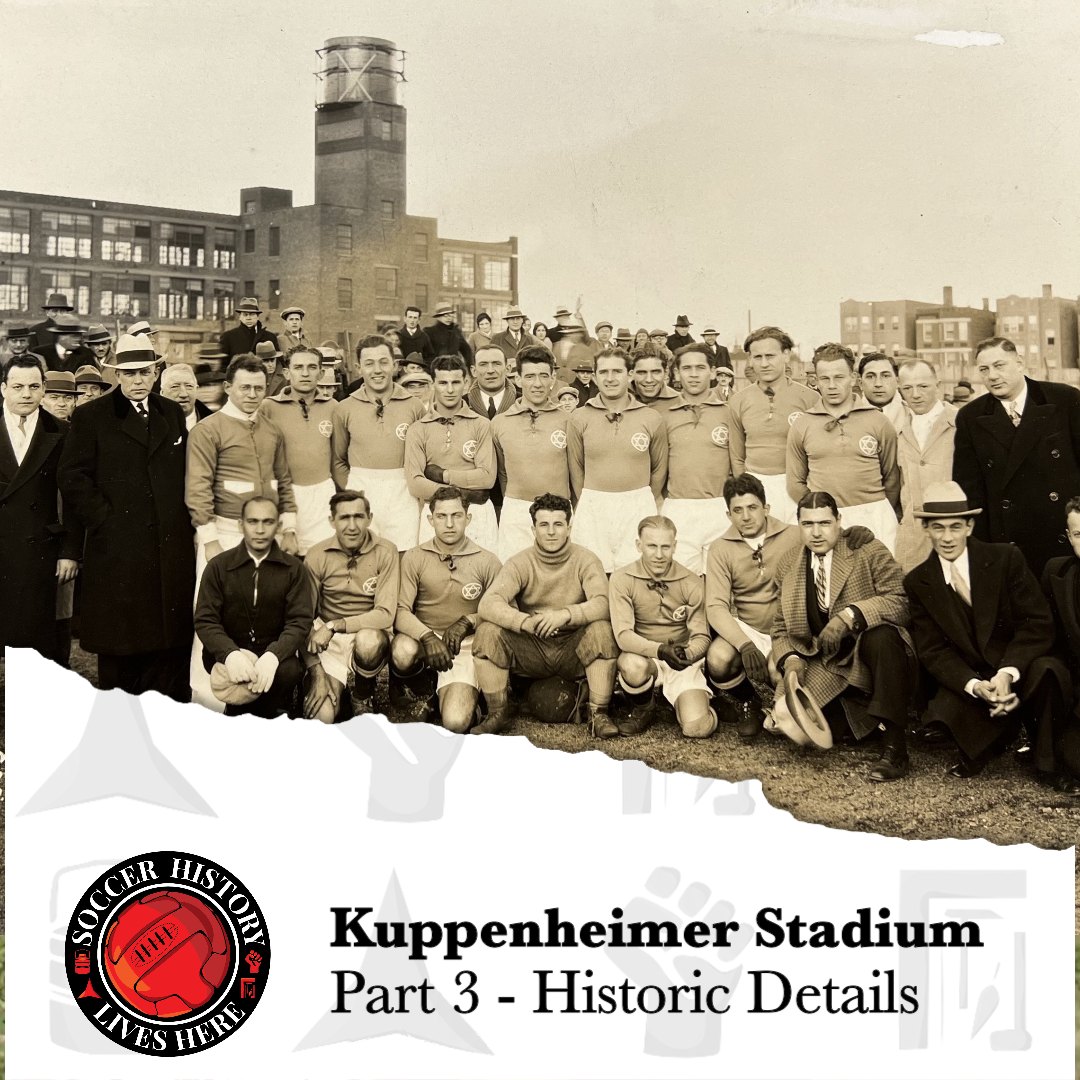
By 1939, top level soccer at 19th and Keeler was gone and, in many ways, the rise and fall of Kuppenheimer Stadium mirrored Chicago’s professional soccer scene in the 1930’s.
“Professional” teams came and went, and though some local clubs like Sparta could still pull in sizable crowds, as the US moved toward WW II, a lot of teams and grounds disappeared, and that included Kuppenheimer.
Despite its short history, Kuppenheimer Stadium had a lot of high-quality games and players. #USMNT stars Billy Gonsalves (2) and Julius Hjulian (3-Sparta, circled) played home games there, and in 1934 a match in the best of 3 #USOpenCup Western final between Chicago’s Wieboldt Wonderbolts and St. Louis Stix, Baer & Fuller took place there (4-a 1-0 win for the Chicago side).
The Maccabees team was the longest serving tenant. Originally an amateur side mainly made up of players from the local Jewish community, Maccabees became a fully professional side, which recruited international players such as Jimmy Ramsay, (who may have been a @Cowdenbeath player, 5), James McGee (reportedly a former @PrestonNorthEnd player) and the creatively named German player, “Twenty Grand” Hubert (6).
After winning the Illinois championship Peel Cup in 1936, Maccabees had designs on winning the National Championship as well. In 1938 they became Manhattan Beer, a team that will feature in a number of future Soccer Lives Here stories (7).
The “Brewers” recruited heavily and in addition to the aforementioned Gonsalves included World Cup veteran Warner “Scotty” Nilsen, as well as Spanish player, Fabri Salcedo in their lineups. Billy Alexander, a successful manager and another enigmatic Chicago soccer figure was their manager as they almost succeeded in winning the 1939 US Open Cup title, finishing runners-up to Brooklyn Celtic St. Mary (8).
While Kuppenheimer Stadium in North Lawndale had only a decade or so of history, it packed in a lot of very high quality soccer and its location at 19th and Keeler is definitely a spot where Soccer History Lives.
Citations
1) Maccabees Team Photo 29-30, Hap Meyer Collection, Southern Illinois Edwardsville
2) Billy Gonsalves Photo, Hap Meyer Collection, Southern Illinois Edwardsville
3) 1927-Sparta Team Photo-11 Apr 1927 Chicago Tribune-Hjulian Circled
4) Wonderbolts Article-18 Mar 1934 Chicago Tribune
5) Ramsay Cowedebeath-18 Mar 1934 Chicago Tribune
6) Clippings with “Twenty Grand”: Herb Choice Collection, 1933
7) Manhattan Beer team photo-9 Apr 1939 Chicago Tribune
8) Brooklyn St. Mary Celtic-1935 Brooklyn Football Foundation
Credits
CITATIONS:
Kuppenheimer Clothing Store Image, Wikipedia, public use
SHLH concept image of Kuppenheimer Stadium by Drew Wasserman
Narration video filmed in North Lawndale on 3 August 2026
Kuppenheimer Softball team from Chicago Jewish History Newsletter Vol. 43 No. 3 Summer 2019
Chicago Maccabees AC photo 1930, Hap Meyer Collection, Southern Illinois Edwardsville
1950 Sanborn Map, Sanborn Fire Insurance Map from Chicago, Cook County, Illinois. Sanborn Map Company
1938 Aerial Photo of North Lawndale
Chicago Bricklayers with Anton Cermak, Hap Meyer Collection, Southern Illinois Edwardsville
Chicago Hebrews: 9 Sep 1917 Chicago Tribune
Youth photo: Crane Tech HS, Eli, the Story of a Patriarch by Eli Field
Hakoah Vienna Team photos, Vienna Hakoah collection
Bela Guttman photo, James Brown Collection
1926 White Sox Park, 10 May 1926 Chicago Tribune
1926 White Sox Park Chicago win, 17 May 1926 Chicago Tribune
Hakoah Centers Photo, National Soccer League 50th Anniversary program
Sparta team with Peel Cup, 1932 final post game photo, Hap Meyer Collection, Southern Illinois Edwardsville
Program, 1937 Peel Cup Final, Carbon Hill Museum, Dick Vidano Collection
Clippings with Julius Hjulian: Herb Choice Collection, 1933
1932 Jewish Youth Field Day (15 May 1932 Chicago Tribune)
We welcome your insights, corrections, and perspectives. Your contribution helps build a more complete history of the game.